5 photos that look stunning lit upWhich kinds of image work best in a lithophane, and why
A lithophane isn't a print. It's an image made of thickness: where there's shadow, the material is thick and blocks the light; where there's brightness, it's thin and lets the light through. Which means not every image works the same way.
There are five kinds that almost never fail. And three that are best avoided. Here they are, so you can choose wisely before uploading yours.
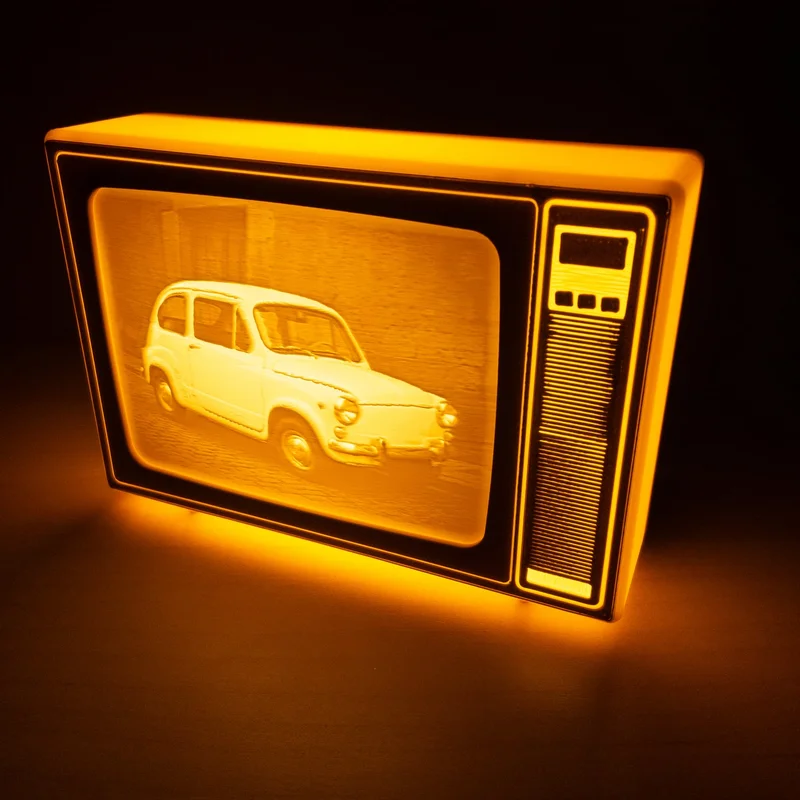
The close-up portrait
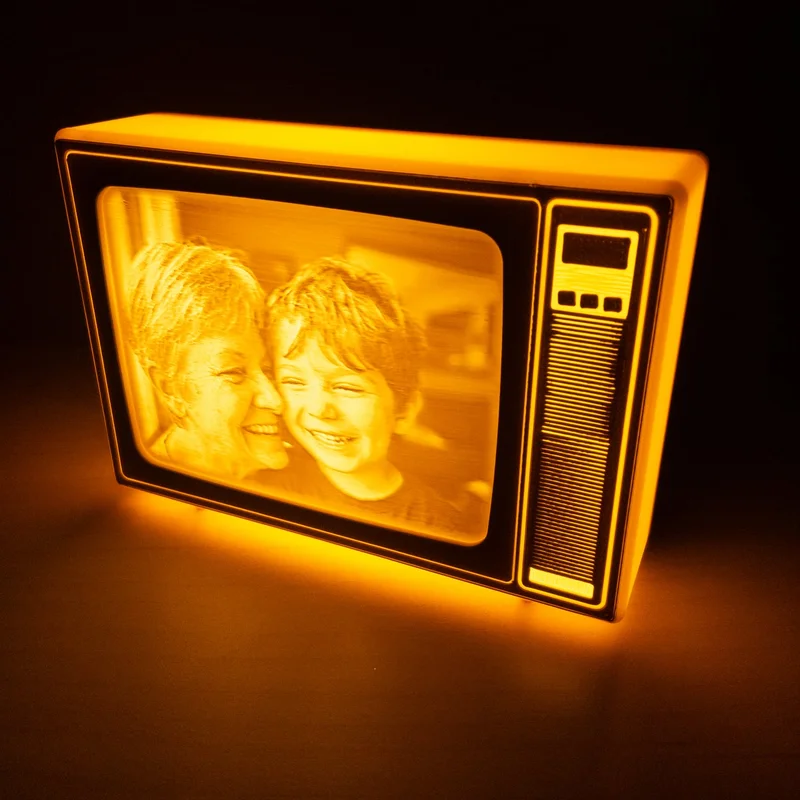
A face that fills the frame, well lit, looking at the camera or in profile. It's the image that works best, and that's no accident: skin has mid-tones and features have strong shadows. The lithophane turns that contrast into relief and, once it's lit, the face appears with a depth that a paper print simply doesn't have.
The closer, the better. A full-length portrait leaves the face small and the details get lost.
The pet looking at the camera
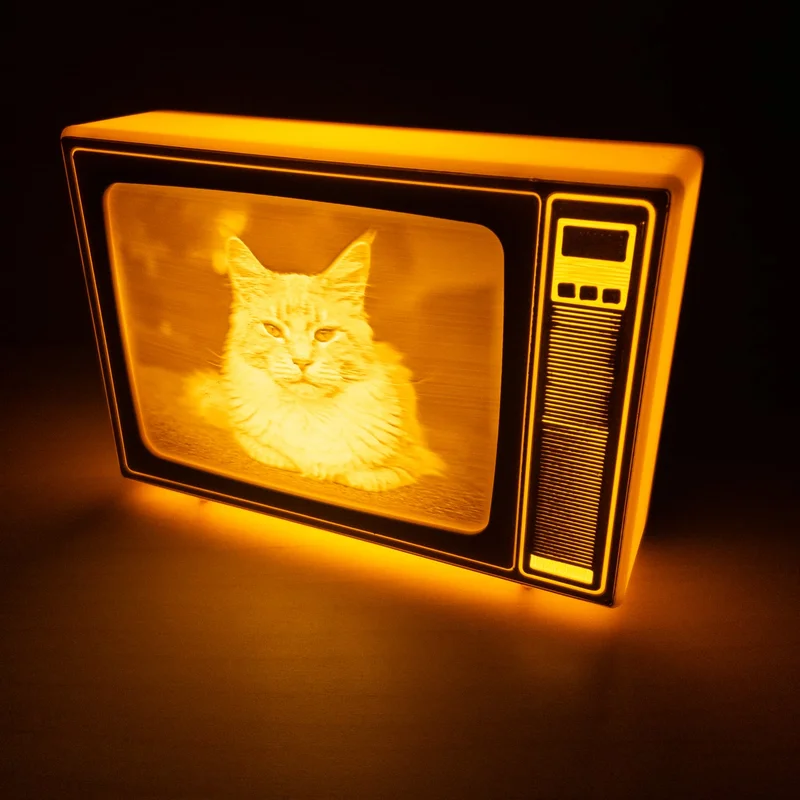
Dogs and cats have one thing going for them: fur. A coat caught in side light is full of tiny contrasts, and in a lithophane that becomes texture. Add a pair of bright eyes looking straight into the lens and you've got an image that gets to you the moment it lights up.
Steer clear of shots where the animal is moving or out of focus: what looks funny on your phone turns into a smudge in relief.
The landscape with a clear silhouette
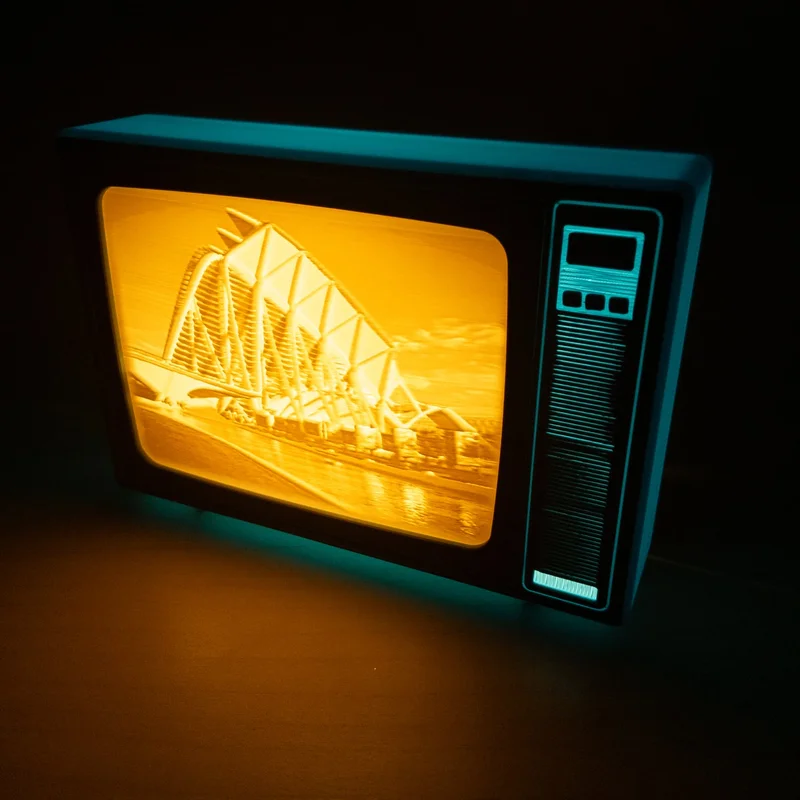
A beach with the horizon, a mountain outlined against the sky, a skyline at sunset. What makes these work is the line between light and dark: the sky lets the light through, the land blocks it, and the shape draws itself.
Very even landscapes, like a dense forest or a sea with no horizon, come out flat. Look for one with a recognisable shape.
The old black-and-white photo
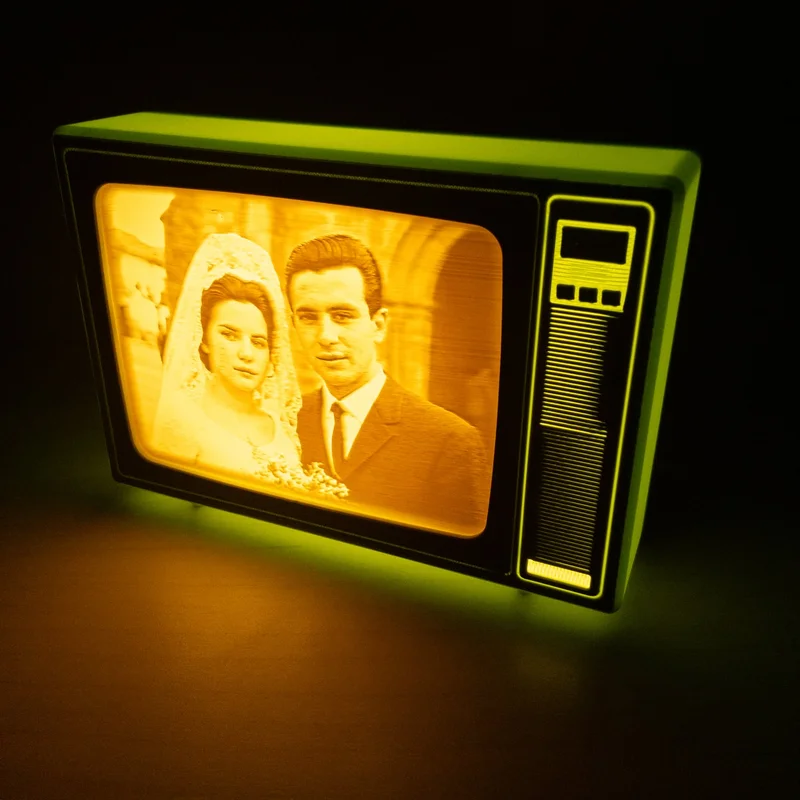
Your grandparents' photos, weddings from another era, prints from a roll of film. They already come in greyscale, which is exactly the language a lithophane speaks, and lit up in warm tones they look as if they were made for it.
If it's been scanned or photographed off a print, make sure it's sharp and free of glare. Small scratches don't matter: they melt into the relief and add character.
The small group
Two, three, four people. A couple, a family, your oldest group of friends. As long as the faces are big within the frame, the lithophane handles them well and the image gains a story.
Once you get to five or six people, each face is too small and the result turns muddy. For big groups, go for a photo where the faces are in the foreground, even if not everyone makes it in.
And three to avoid
- Dark or night-time photos. Almost everything turns into thickness and the light has nowhere to get out.
- Backlit shots. The subject comes out black and the background white: the exact opposite of what you want to see.
- Lots of tiny detail. Small text, patterns, crowds. In relief it all turns into noise.
The rule that sums it all up: if the image looks good on your phone with the brightness turned right down, it'll look good lit up. And remember the frame is landscape, 4:3, and you'll see the preview before you pay.
Already know which one's yours? Upload it and see how it looks before you decide.