Nefertiti and NefertariNot the same queen
If you have ever mixed them up, plenty of people do. Both were queens of Egypt and both carry the word "beautiful" in their names. But they lived some seventy years apart, married to pharaohs who had nothing in common.
Here is how to tell them apart.
Blame it on one word
In ancient Egyptian, nefer means beautiful or good. It turns up in a great many names, and both queens carry it at the front. Nefertiti means "the beautiful one has come". Nefertari is usually translated as "the most beautiful" or "beautiful companion".
Two names that sound almost the same and that, written in hieroglyphs, do not look that alike.
Nefertiti, queen of the sun
Nefertiti was the great royal wife of Akhenaten, in the middle of the 14th century BC, during the 18th dynasty. She lived through a very strange time: her husband set aside the old gods to worship just one, the disc of the sun, and built a new capital in the middle of the desert, Amarna.
She held unusual power for a queen. She appears in reliefs at the same size as the pharaoh, making offerings to the sun with her six daughters, and even smiting enemies, a scene reserved for kings. An inscription found in a quarry near Amarna shows she was still queen almost at the end of the reign. After that, her trail goes cold. Some believe she ruled under another name.
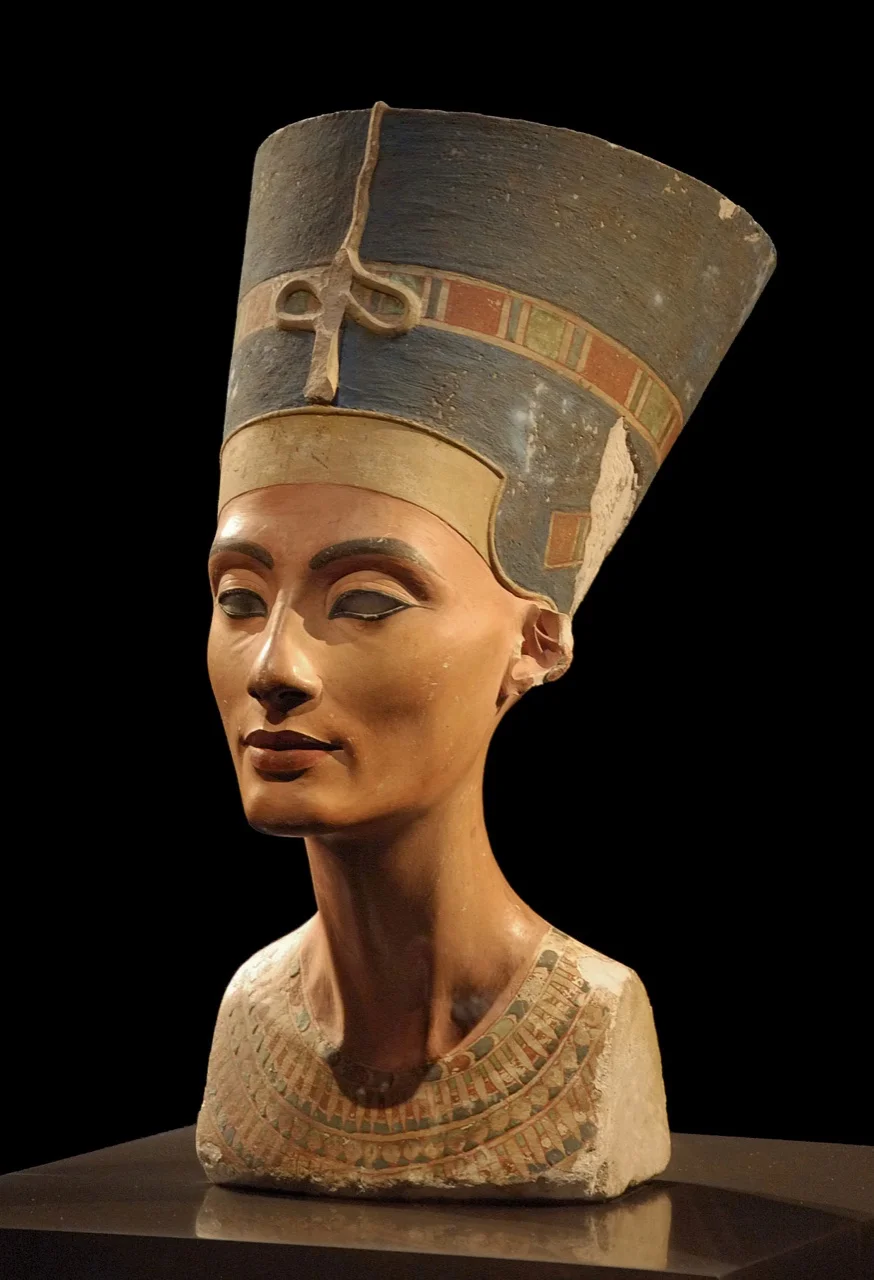
Her image is the Berlin bust: the flat blue crown, the long neck, a single eye. We tell its story here.
Nefertari, queen of Ramesses
Nefertari came some seventy years later, in the 19th dynasty. She was the first great royal wife of Ramesses II, the pharaoh who filled Egypt with temples and colossal statues. And Ramesses did not hold back with her.
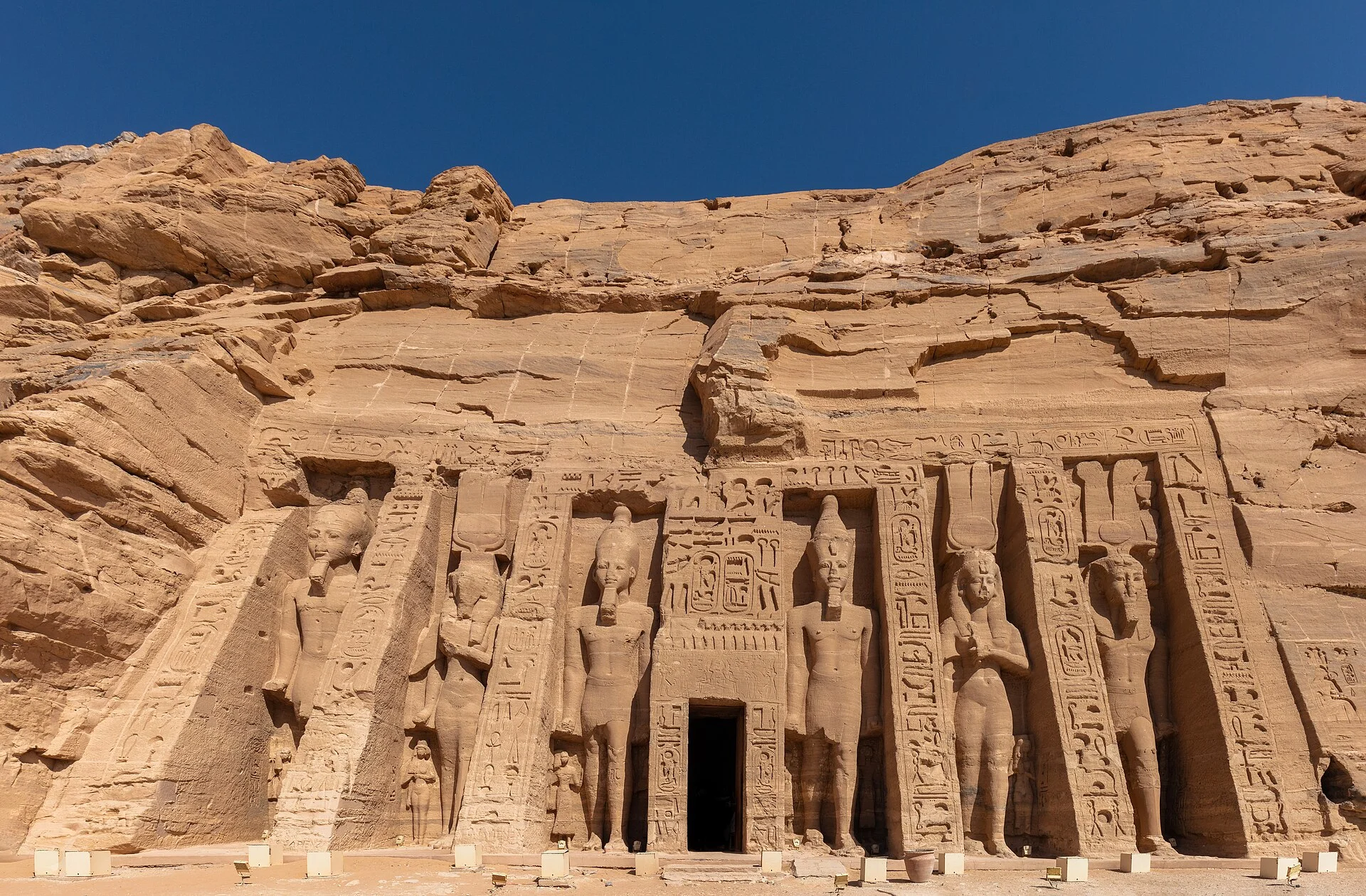
At Abu Simbel, next to his great temple, he had a smaller one cut into the rock, dedicated to the goddess Hathor and to Nefertari. On the façade, the queen's statues are as tall as the king's, which was almost unheard of. In an inscription in that temple, Ramesses calls her "the one for whom the sun shines".
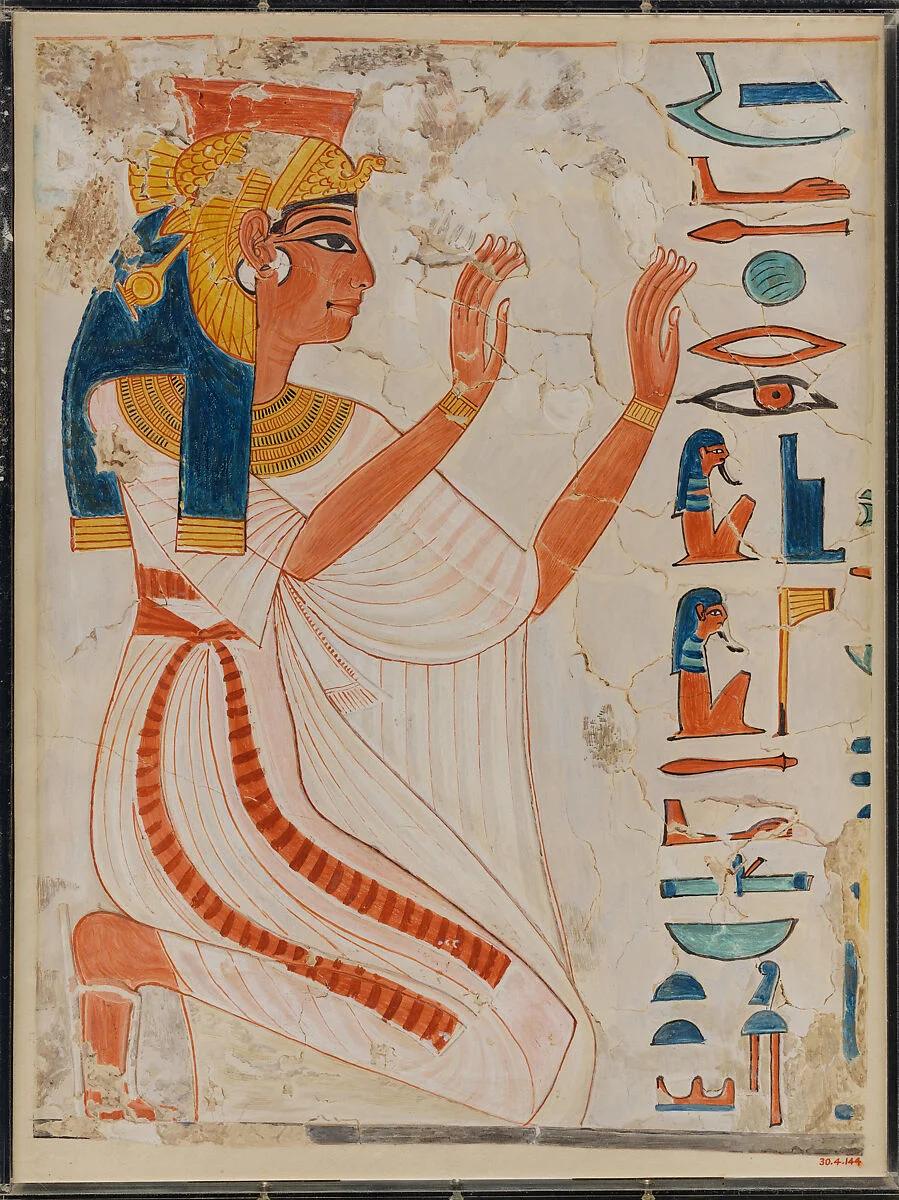
Her famous image is a painted tomb: a woman in profile, in a sheer white dress and a vulture-shaped headdress, among gods and stars beneath a blue ceiling.
How to tell them apart in ten seconds
| Nefertiti | Nefertari | |
|---|---|---|
| Husband | Akhenaten | Ramesses II |
| When | around 1350 BC (18th dynasty) | around 1270 BC (19th dynasty) |
| Where she lived | Amarna, the city of the sun | Thebes and Pi-Ramesses |
| Famous image | a painted stone bust, in Berlin | the paintings in her tomb, in Luxor |
| Her tomb | never found | one of the most beautiful in Egypt |
The trick: Nefertiti, bust; Nefertari, tomb.
And Tutankhamun?
That is the other big question. Tutankhamun was almost certainly the son of Akhenaten, Nefertiti's husband. But DNA tests from 2010 suggest his mother was another woman: an unnamed mummy known as "the Younger Lady", a sister of Akhenaten himself. Some Egyptologists still argue that his mother was Nefertiti; most do not.
What is certain is that Tutankhamun married Ankhesenamun, Nefertiti's daughter. So Nefertiti was most likely both his stepmother and his mother-in-law. Nefertari, on the other hand, was born when Tutankhamun had been dead for decades.
One famous tomb, and one nobody can find
Nefertari's tomb was discovered in 1904 in the Valley of the Queens. Its paintings are so beautiful that it is called the "Sistine Chapel" of Egypt, and they were so damaged by salt in the walls that it took a six-year restoration, from 1986 to 1992, to save them. Today it can be visited, with limited tickets.
Nefertiti's is still missing. Her mummy has not been identified with certainty either. In 2015 an Egyptologist suggested it might lie behind a wall of Tutankhamun's tomb; radar scans have not confirmed it.
Our Nefertiti
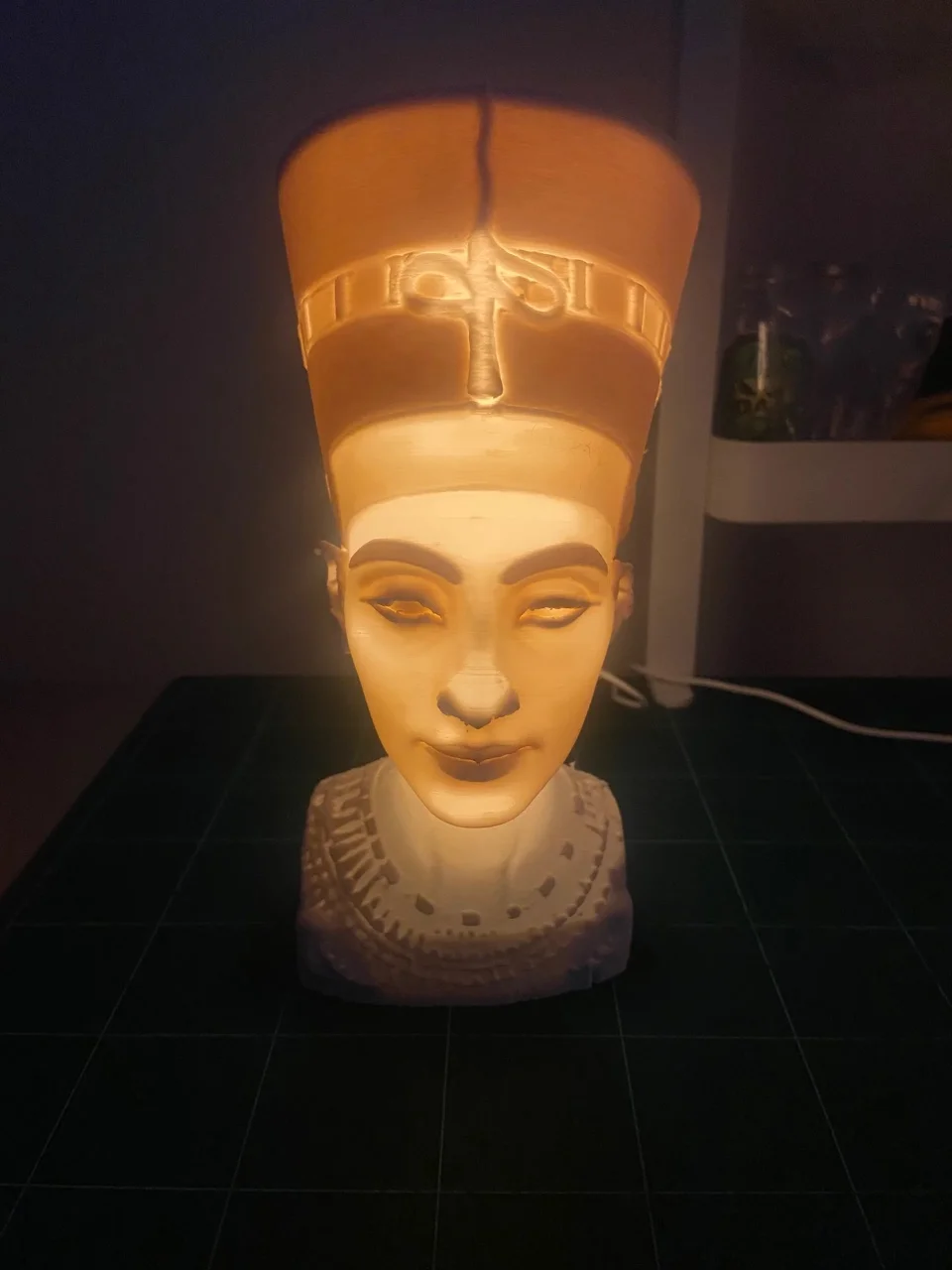
In the workshop we have had Nefertiti on our minds for weeks, because we are turning her bust into a lamp: white when it is off, with her face drawn by the light when you switch it on. We are telling the story in this series. The next post is about her most famous feature: the missing eye.
Frequently asked questions about Nefertiti and Nefertari
Are Nefertiti and Nefertari the same person?
No. Nefertiti was the wife of Akhenaten, around 1350 BC; Nefertari was the wife of Ramesses II, some seventy years later.
Which one was more important?
Both were great royal wives with unusual power. Nefertiti appears almost as Akhenaten's co-ruler; Nefertari had her own temple at Abu Simbel.
Was Nefertiti Tutankhamun's mother?
Probably not. DNA points to another woman, a sister of Akhenaten. Nefertiti was his mother-in-law, though: Tutankhamun married her daughter Ankhesenamun.
Where is Nefertiti's tomb?
It has not been found. Nefertari's is in the Valley of the Queens, in Luxor, and can be visited.